Larch Creek Birds
What the birds (and frogs) are saying at a creek in western Washington

Bird
Sandhill Crane
Antigone canadensis
Cranes (Gruidae)
New for the creekHeading out
Summer visitor. Expected here roughly Mar to May. Moving on: expectation falls from 57% now to 31% a month from now.
- Field marks
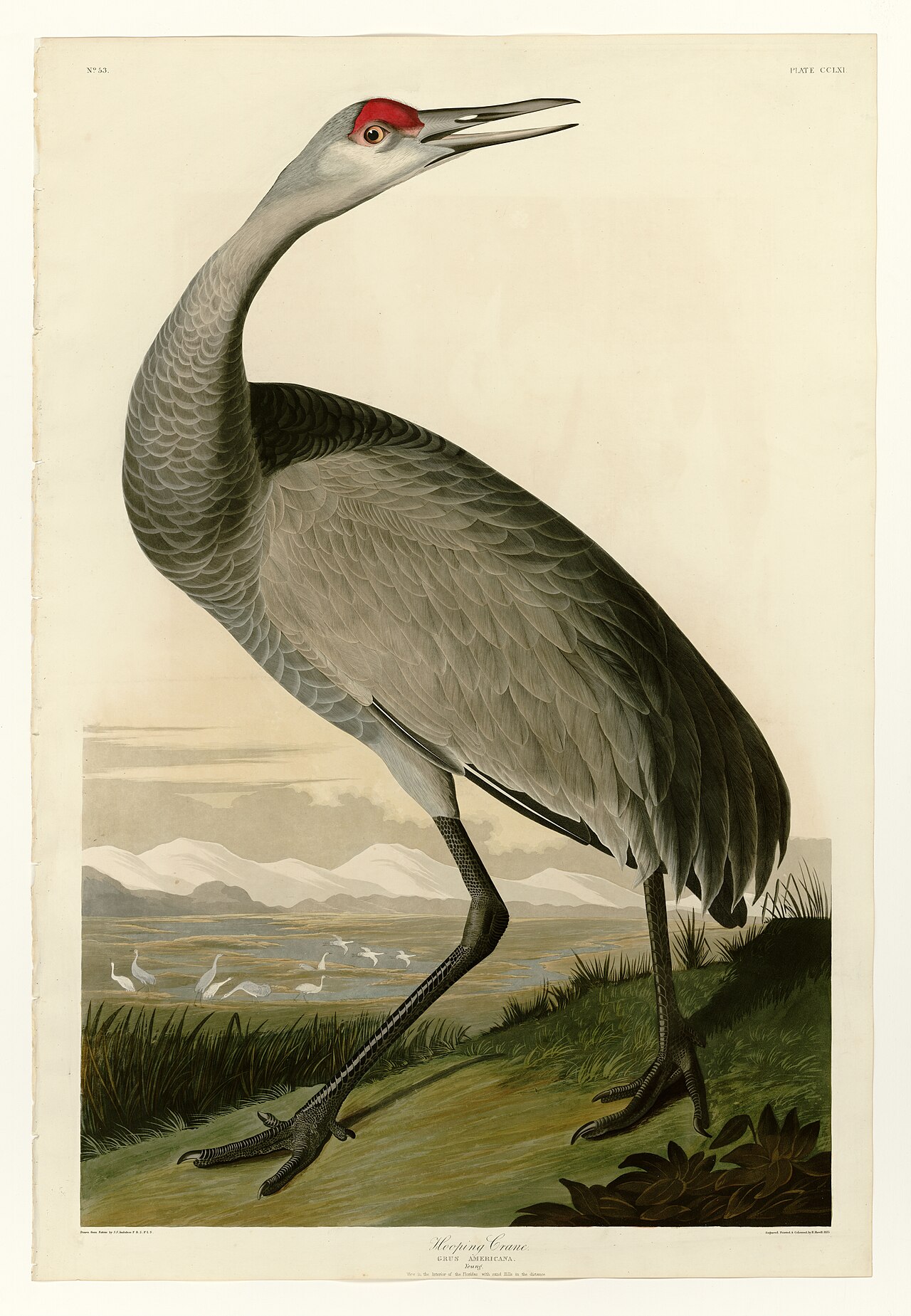
- A tall grey crane with a bare red forehead, long black legs and a bustle of drooping feathers over the tail. Flies with the neck straight out like a javelin; herons tuck theirs in.
- Male & female
- Males and females look alike; males average slightly larger.
- Voice
- A loud, rolling, bugling rattle that carries over a mile, often from flocks so high overhead that you hear them for a full minute before you find them.
- Diet
- Grain, tubers, insects, frogs, mice; probes and gleans in fields and marshes.
- Habitat
- Marshes, wet meadows and farmland. Most cranes over Puget Sound are commuters on the way to or from California.
- Nesting
- A mound of marsh vegetation; two eggs. The chicks, called colts, walk within hours and look like a bath mat that has decided to have a go at life.
- Size
- About 4 ft tall, a 6½-ft wingspan and 7–11 lb: the height of a first-grader and the weight of a bowling ball, if the bowling ball could fly and insisted on announcing it.
Their flyway over the lowlands peaks in spring and again in September–October, so an autumn flock calling overhead is almost certainly heading south.
Season how expected it is here, week by week
At the creek 3 calls on 1 day, first Oct 31, last Oct 31
Recordings
Clearest recording · Oct 31 12:29 am · 85% sure

From the encyclopedia
The sandhill crane is a species of large crane of North America and extreme northeastern Siberia. The common name of this bird refers to its habitat, such as the Platte River, on the edge of Nebraska's Sandhills on the American Great Plains. Sandhill cranes are known to frequent the edges of bodies of water. The central Platte River Valley in Nebraska is the most important stopover area for the nominotypical subspecies, the lesser sandhill crane (A. c. canadensis), with up to 450,000 of these birds migrating through annually.
From Wikipedia, "Sandhill crane", CC BY-SA 4.0.