Larch Creek Birds
What the birds (and frogs) are saying at a creek in western Washington
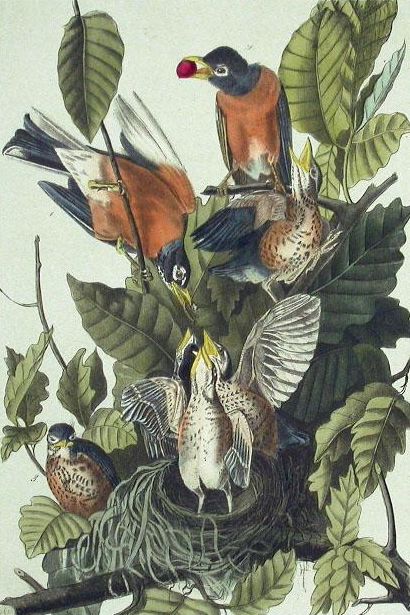

Bird
American Robin
Turdus migratorius
Thrushes and Allies (Turdidae)
Year-round resident. Expected at the creek in every month.
- Field marks
- The familiar thrush: grey-brown above with a brick-red breast, a dark head with white eye-arcs and a yellow bill.
- Male & female
- The male's head is blacker and his breast brighter; the female is paler and greyer-headed.
- Voice
- A rich, caroling 'cheerily, cheer-up, cheerio' from before dawn in spring, and a sharp 'tut-tut-tut' alarm.
- Diet
- Earthworms and insects from lawns and leaf litter, located by looking, not listening, whatever it appears to be doing; berries and fruit in autumn and winter, occasionally to the point of tipsiness.
- Habitat
- Lawns, forest edges, orchards; big winter flocks roam for berries.
- Nesting
- A mud-lined grass cup in a tree fork or on a ledge; 3–4 eggs of the blue that is named after it, two or three broods.
- Size
- 9–11 in long, about 2¾ oz: a deck of cards with an early alarm clock.
One of the first voices of the dawn chorus, starting in the dark before most birds have considered the matter.
Season how expected it is here, week by week
At the creek 9 calls on 1 day, first Oct 29, last Oct 29
Recordings
Clearest recording · Oct 29 11:00 am · 92% sure
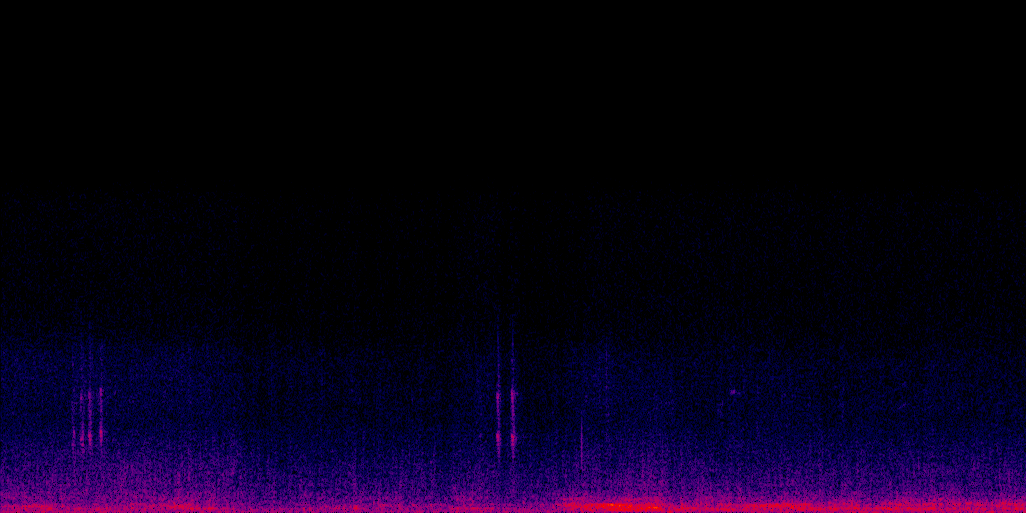
Recent · Oct 29 11:00 am · 89% sure
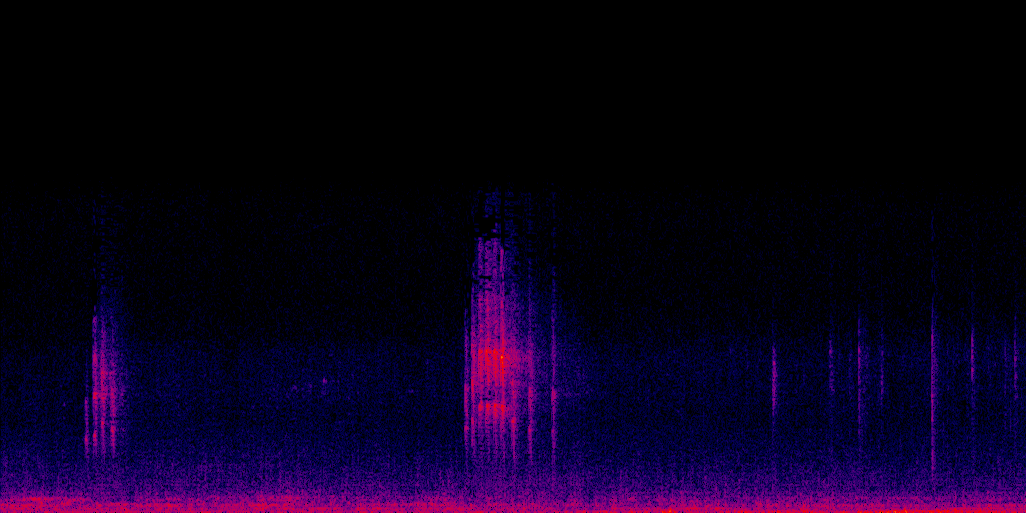
Recent · Oct 29 10:32 am · 89% sure
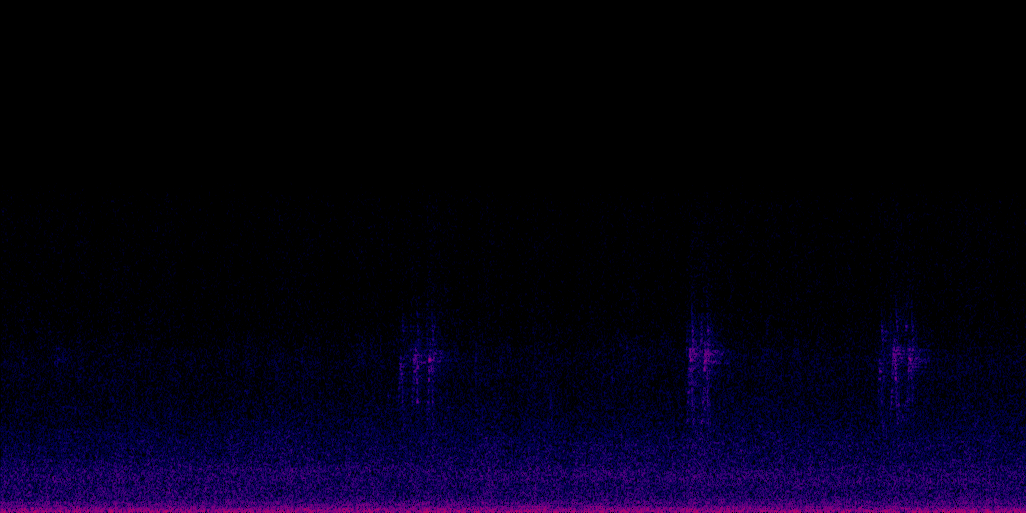
Recent · Oct 29 10:30 am · 88% sure

From the encyclopedia
The American robin is a migratory bird of the true thrush genus and Turdidae, the wider thrush family. It is named after the European robin because of its reddish-orange breast, though the two species are not closely related, with the European robin belonging to the Old World flycatcher family. The American robin is widely distributed throughout North America, wintering from southern Canada to central Mexico and along the Pacific coast.
From Wikipedia, "American robin", CC BY-SA 4.0.