Larch Creek Birds
What the birds (and frogs) are saying at a creek in western Washington

Mammal
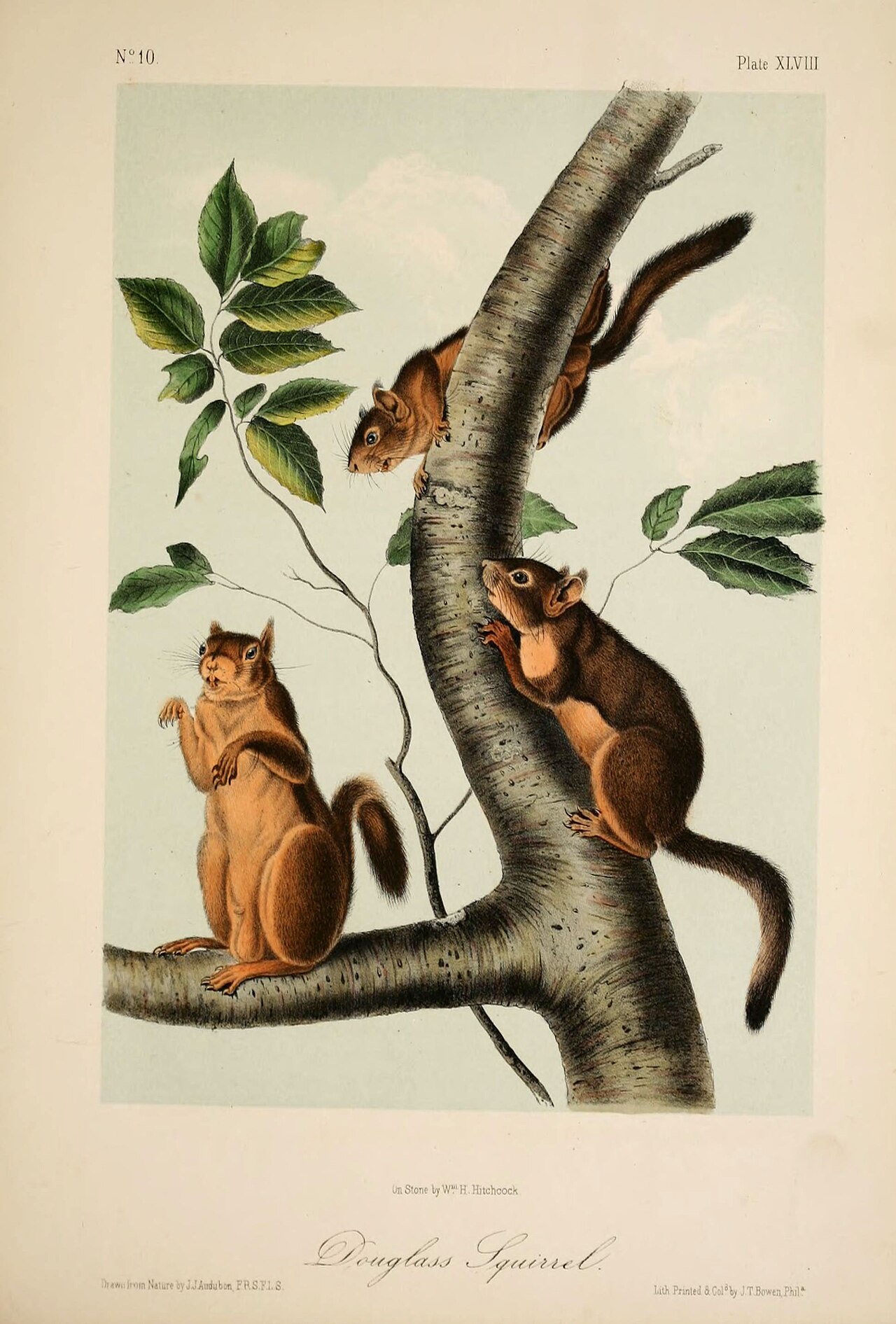
Douglas's Squirrel
Tamiasciurus douglasii
Sciuridae
Heading outMammal
Summer visitor. Expected here roughly Mar to Dec. Moving on: expectation falls from 76% now to 57% a month from now.
- Field marks
- A small, dark tree squirrel: olive-brown above with a rusty-orange belly and a tufted tail edged in pale; a black side stripe in summer.
- Male & female
- Alike.
- Voice
- A loud, scolding chatter and an explosive 'chirr' that can go on for minutes when a cat, hawk or person intrudes, roughly translating as 'and another thing'.
- Diet
- Conifer seeds above all: cuts green cones in autumn and buries them by the hundred in damp middens, a pantry that also plants trees. Also fungi, buds, berries.
- Habitat
- Conifer forest west of the Cascades; the native 'chickaree'.
- Nesting
- A ball of twigs and moss high in a conifer, or a tree cavity; two litters a year.
- Size
- About 12 in including the tail, 5–10 oz: a can of soup with a tail and a grievance.
The cone-scale piles at the base of a Douglas-fir are its dining table. Scolding peaks in autumn as it defends the winter store.
Season how expected it is here, week by week
At the creek 5 calls on 2 days, first Oct 29, last Oct 31
Recordings
Clearest recording · Oct 29 1:56 pm · 98% sure
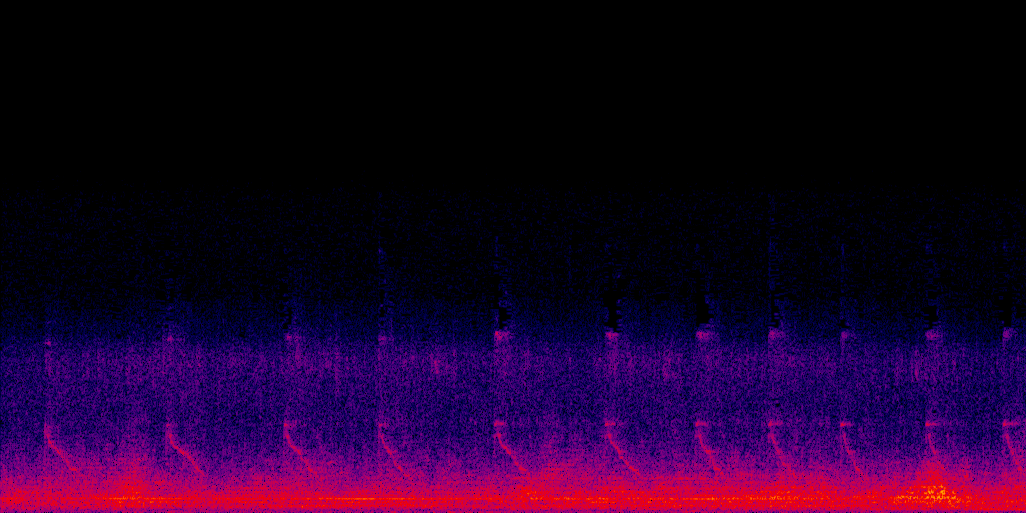
Recent · Oct 29 1:45 pm · 90% sure
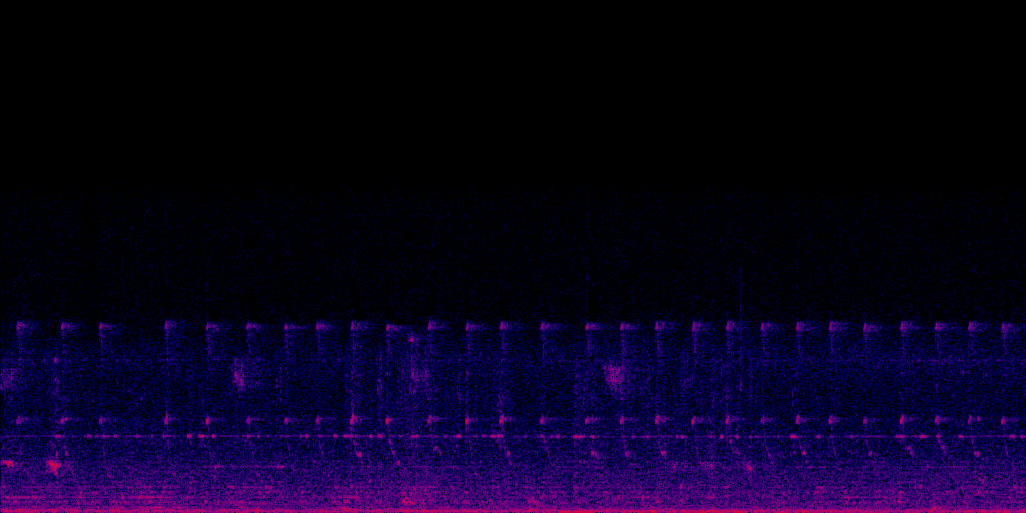
Recent · Oct 29 1:44 pm · 93% sure
From the encyclopedia
The Douglas squirrel is a pine squirrel found in western North America, from the Pacific Northwest to central California, with an isolated subspecies in northern Baja California, Mexico. It is sometimes known as the chickaree or pine squirrel, although these names are also used for the American red squirrel. Variant spellings of the common name are Douglas' squirrel and Douglas's squirrel. The Native Americans of Kings River called it the "Pillillooeet", in imitation of its characteristic alarm call.
From Wikipedia, "Douglas squirrel", CC BY-SA 4.0.